LCC Gets Into the Weeds at Plant Camp
LCC Autumn 2026 E-News
For the past five years, scientists, lake managers, and technicians from across the Northeast have converged annually during the first week of September for a three-day intensive to dive into the world of aquatic plants. Organized and hosted by the Northeast Aquatic Plant Management Society (NEAPMS), Plant Camp offers hands-on opportunities to learn freshwater aquatic and wetland plant identification, field sampling methods, management strategies, data collection methods, and reporting tools. Eileen Fitzgerald, LCC’s Education and Outreach Associate, attended the past two Plant Camp sessions—last year in Maine and this year in Massachusetts. Eileen has turned her learning into action, using these expert-led sessions to inform LCC’s work on aquatic invasive species, particularly with the Champlain Aquatic invasive Monitoring Program (CHAMP).
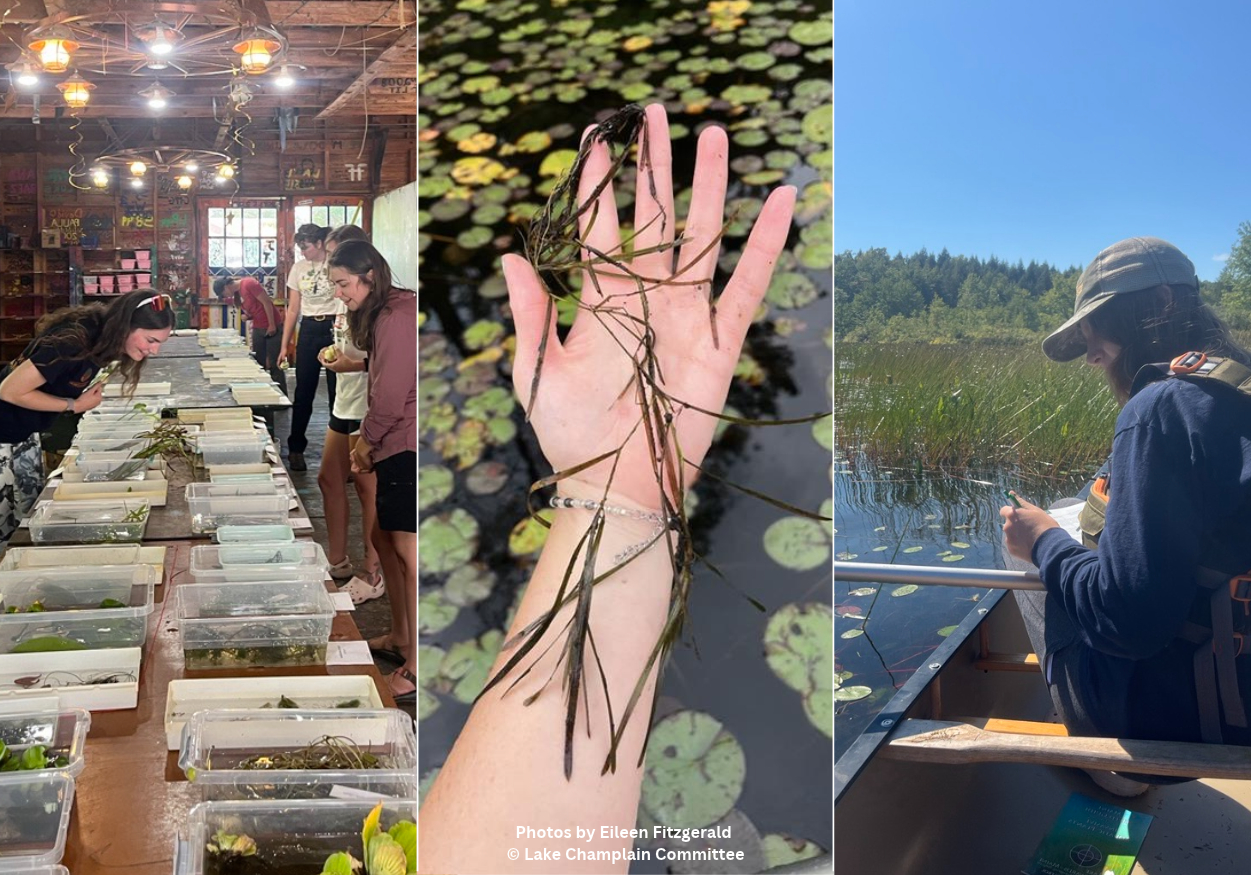
This year, Plant Camp was held at a summer camp nestled in the Berkshires on Shaw Pond. Upon arrival, participants were assigned bunks and allowed time to settle in. For the Plant Camp crowd, “settling in” consisted largely of exploring the pond’s shoreline. There was plenty to investigate on land as well: the NEAPMS Board of Directors organized an impressive live collection of hundreds of aquatic plants. These specimens ran the gamut: common, rare, invasive, native; leaves submersed and feathery, or floating broad and glossy on the water’s surface; bright yellow flowers peeking up from the water; stems in tangled mats, or emerging tall. All specimens were labeled and sorted by plant family, a true dream for aquatic botanists.
The intensive covered a wide range of coursework with hands-on training on plant biology, invasive species, data collection methodology, integrated pest management, volunteer coordination, and science communication. From kayaks and canoes, participants completed a full species inventory of Shaw Pond, tested survey drones, and debated whether certain specimens were Potamogeton gramineus or Potamogeton illinoensis (or perhaps a hybrid). Through hands-on activities, Eileen gained skill and confidence in identifying the plants CHAMP volunteers collect and photograph, and has been inspired by new survey techniques and data applications. She learned how other volunteer programs like CHAMP are run and gained valuable insights for next year’s monitoring season. She also had her copy of Aquatic and Wetland Plants of Northeastern North America signed by the author, Barre Helquist, Professor of Biology at the Massachusetts College of Liberal Arts, whose well-attended evening lecture on linear-leaved pondweeds was filled with side-stories and niche plant humor.
Plant Camp reinforces the importance of sharing knowledge and resources at a regional scale. Lake Champlain is the largest lake in the Northeast, and it teems with native aquatic flora. It can act as a source of aquatic invasive species for waterbodies in the region, but it’s also in need of protection from invasive species that have wrecked havoc in other waterbodies. Understanding how other professionals approach aquatic plant research and management is key for keeping Lake Champlain’s underwater plant communities healthy.
Eileen’s trip to Plant Camp was funded in part by the Great Lakes Fishery Commission (GLFC) under an assistance agreement to NEIWPCC in partnership with the Lake Champlain Basin Program. Thank you to the NEAPMS Board of Directors for their work facilitating Plant Camp.