LCC Statement on 1/6/21 Attack on the U.S. Capitol
The Lake Champlain Committee (LCC) strongly condemns the 1/6/21 attack on the United States Capitol. This assault on our democracy was an act of domestic terrorism. The actions were unpatriotic and unlawful. The stark contrast between how the mob of…
The Lake Champlain Committee (LCC) has been named a “2020 Top-Rated Nonprofit” by GreatNonprofits, the leading provider of user reviews and ratings of charities and nonprofits. The Top-Rated Nonprofit Award is based on the five-star ratings and…
In January of 2020, a coalition of 30 business, environmental, low-income, youth, public health, faith, and climate justice organizations including LCC identified the Global Warming Solutions Act (GWSA) as an essential priority for the 2020 Vermont…
The Randy Preston Road Salt Reduction Act, a bipartisan bill that will help to reduce road salt pollution in the Adirondack Park, was signed into law by Governor Cuomo on December 2, 2020. The bill passed both houses of the New York Legislature in…
Lake Champlain is home to 51 known non-native and aquatic invasive species (AIS), from zebra mussels and alewife to water chestnut and Eurasian watermilfoil, but not yet Asian clam. Invasive species are not native to the Lake Champlain Basin and can…
“The importance of water is often overlooked today. To the Abenaki people, water is the web of life that connects all living things together in both past, present and future generations,” states Chief Don Stevens of the Nulhegan Abenaki Tribe in the…
Salt flavors our food and keeps our winter travels safe, but it can have a negative impact on waterways. According to the United States Geological Survey (USGS), 20 million metric tons of road salt are spread annually in the U.S.—equivalent to…
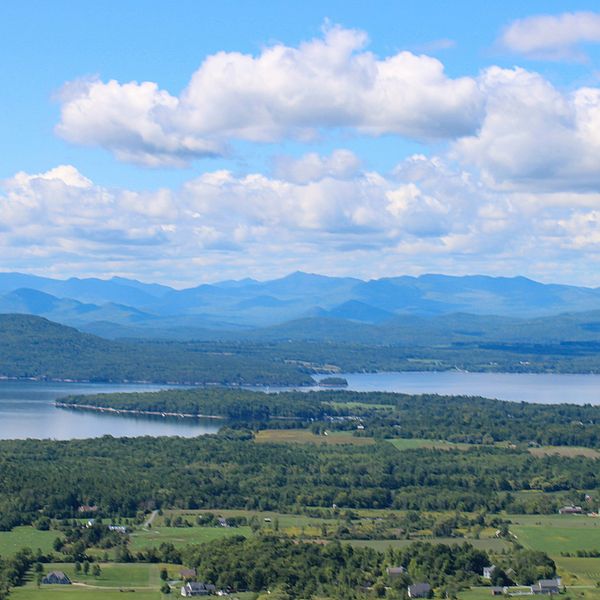
The single entity of Lake Champlain contains five distinct segments, each with its own character: the South Lake, the Main Lake, and, east of the islands, Malletts Bay, the Inland Sea, and Missisquoi Bay.
Atlantic salmon spawning recently came to a close in Lake Champlain. Unlike their cousins in the Pacific Ocean, Atlantic salmon don’t typically die after spawning, but instead migrate back to the lake (or ocean) to feed.
Start the new year on the right foot with a hike in a state park! Both New York and Vermont State Parks are inviting everyone to celebrate the start of 2021 by heading out on the trails.
Winter is a great time to get outdoors and it is especially helpful and healthful during the pandemic. The cold, crisp air is exhilarating and there are no biting insects! Some of the mantras for recreating safely in winter during Covid-19 are:…
We weren’t sure how many people would turn out to monitor during a pandemic that required wearing a mask at public sites and quarantining for two weeks if traveling across state lines. But turn out they did! More than 160 community members signed up…
We send heartfelt thanks to Angela Shambaugh, our longstanding cyanobacteria monitoring program colleague who retired in October from the Vermont Department of Environmental Conservation (VT DEC). Angela has been a key partner in the monitoring…
The University of Vermont (UVM) plans to replace its aging research boat with a hybrid electric “model of seaworthy sustainability”. The quiet, low-emission vessel will be able to run on electric power for two hours and be used as a floating…
First discovered in the southern part of Lake Champlain in 1993, zebra mussels are now found throughout the lake in shallow water areas. Juvenile and adult zebra mussels attach to any hard surface—including native freshwater mussels, the lake’s most…
Both Lake George and Mirror Lake in New York experienced cyanobacteria blooms in early November 2020, the first time cyanobacteria was documented in either waterbody. The Lake George bloom was discovered by the Lake George Association, one of several…
Today is #GivingTuesday, the international day of giving, and a great day to support organizations that make a difference in your life. During this past year, we have all been reminded of the solace and beauty of nature and the importance of clean…
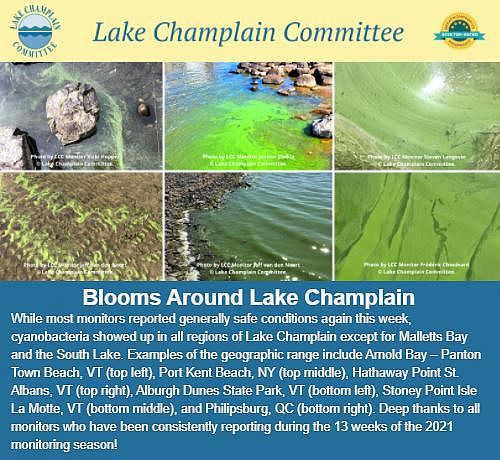
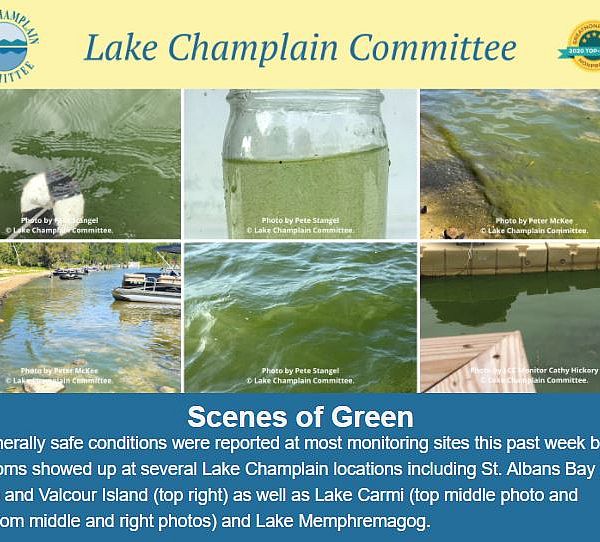
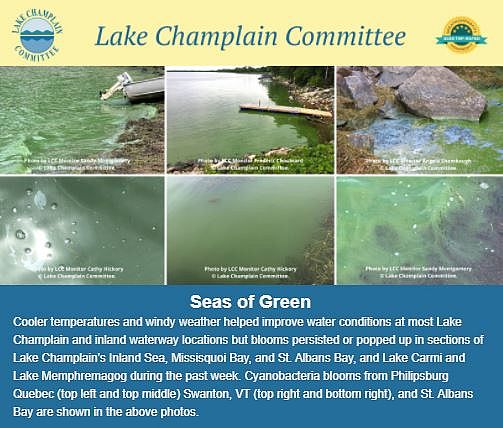
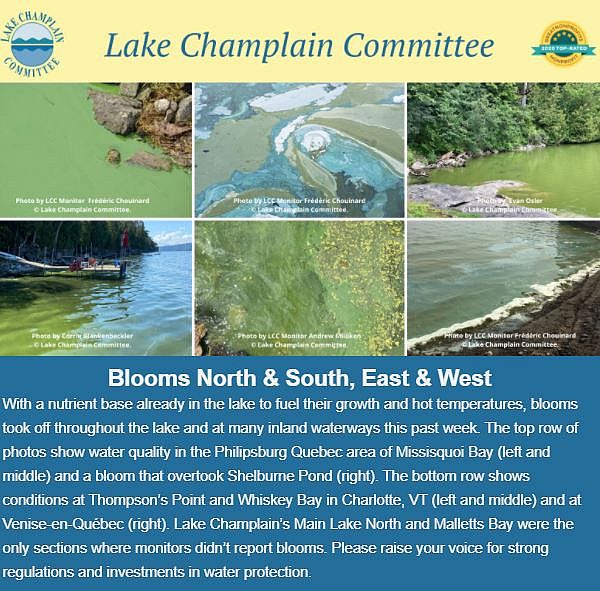
The 2020 Cyanobacteria Monitoring Season is a wrap! A huge thank you to our dedicated volunteers—in sun and rain, heat and cold, monitors collectively filed over 2,500 reports during this year’s 19-week season!
Most monitors who were still able to report observed good conditions this week—exceptions were low alert blooms at Eagle Bay, Rock Point in Burlington and on Shelburne Pond.
Next week will be the last week of formal reporting for the 2020…
Lake Champlain’s Inland Sea, Main Lake North and Main Lake Central along with Shelburne Pond all experienced some blooms this week, while Lake Memphremagog’s previous blooms cleared out. Unseasonably warm temperatures may trigger additional…
Good conditions dominated the cyanobacteria tracker this week for both Lake Champlain and inland lake sites, but we have fewer monitors reporting during the shoulder season. Reports from Missisquoi Bay, Main Lake North, Malletts Bay, Main Lake…
Good conditions prevailed on most of Lake Champlain this week. A few notes of caution however: high alert blooms continue to persist at Lake Carmi and low alert blooms were observed on Lake Champlain’s Inland Sea and the South Lake as well as Lake…
Good conditions were observed this week in Missisquoi Bay, Main Lake Central, Main Lake South, and the South Lake on Lake Champlain and on several inland lakes where monitors are still able to report. Low level alerts were reported on the Inland Sea…
We are more than halfway through the 2020 monitoring season. Report numbers will be lower as beaches and parks close up and seasonal staff leave their posts. However, it’s still a great time to recreate in and around waterways provided you’re well…
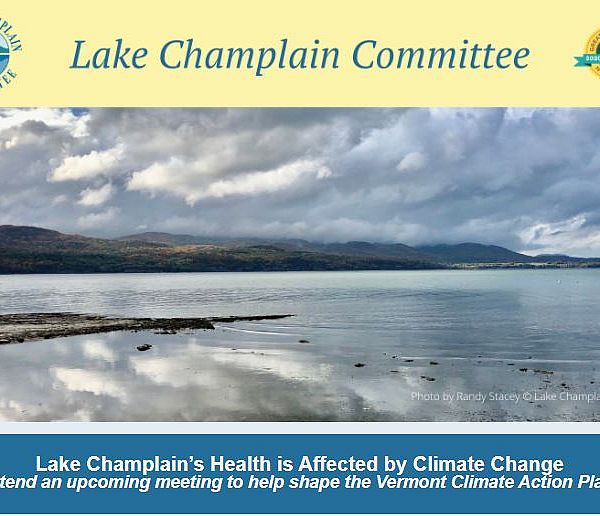
On Tuesday evening, Governor Scott vetoed the Global Warming Solutions Act. The bill, which was overwhelmingly passed by both the Vermont House and Senate earlier, would require Vermont to reduce climate pollution and create a community-driven…
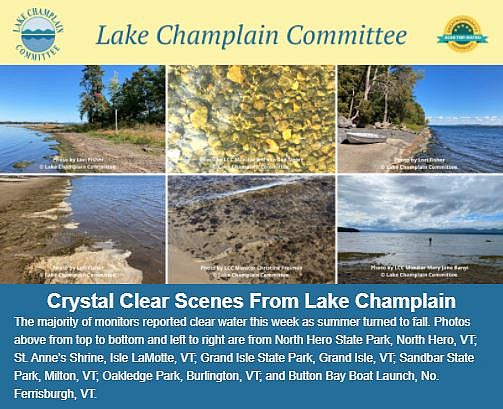
There’s a nip of fall in the air and tinges of color on mountain slopes this week as some schools re-open, docks get pulled and state and municipal parks and beaches begin to close out their summer season. The change in temperature may decrease…
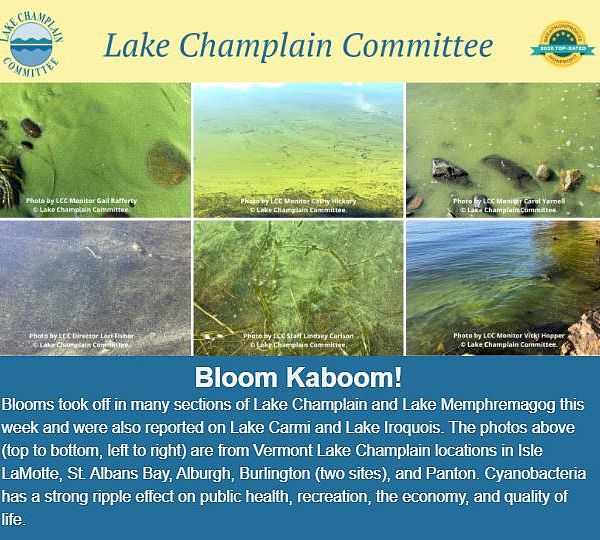
While the cyanobacteria tracker map was dominated by green dots last week, too many red dots evidencing blooms are showing as we head into Labor Day weekend. While good conditions were observed at Lake Champlain’s Malletts Bay, Main Lake South, and…
The cyanobacteria tracker was mainly populated by green dots this week indicating generally safe water conditions. However, blooms were observed in select locations both early and late in the week. Benthic cyanobacteria were also reported from a…
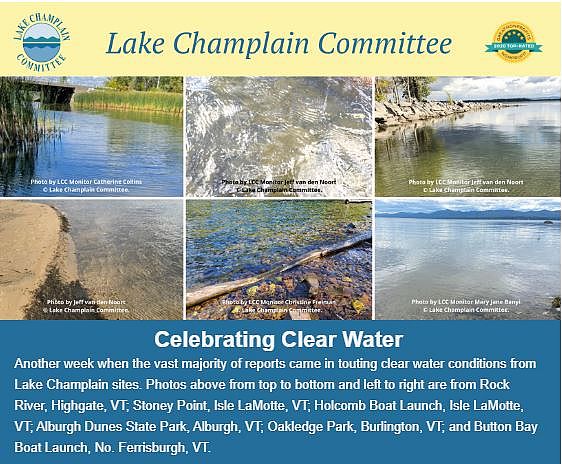
Monitors filed 151 reports this week from Lake Champlain and inland lake sites. The cyanobacteria tracker map shows lots of green dots this week for generally safe conditions. However, blooms are still present in some areas of Lake Champlain and…
It’s been a tumultuous week with hot weather, intense rains that flushed nutrients and partially treated wastewater to Lake Champlain, and some high winds that knocked out power. In the midst of it all cyanobacteria monitors collectively filed 212…
The Lake Champlain Committee (LCC) and partners received 186 monitor reports last week from August 1 through 4:00 p.m. Friday August 7, 2020. Good conditions were observed in Lake Champlain’s Missisquoi Bay, Malletts Bay and the South Lake while…
The Lake Champlain Committee (LCC) and partners received 154 monitor reports this past week from Saturday July 25 through 1:45 p.m. Friday July 31. Good conditions were observed in Lake Champlain’s Missisquoi Bay, Main Lake North, Malletts Bay and…
We received 183 monitoring reports last week through Lake Champlain Committee (LCC) Cyanobacteria Monitoring Program from Saturday July 18 through mid-afternoon Friday July 24. Due to the high volume of reports and some technical issues we weren’t…
It’s been another busy week for the Lake Champlain Committee (LCC) Cyanobacteria Monitoring Program with 152 reports from Lake Champlain and inland lakes from Sunday July 12 through Friday July 17 at 1:30 pm! Good conditions were observed in Malletts…
Thank you for signing up to receive the Lake Champlain Committee’s (LCC) cyanobacteria monitoring reports! Monitoring will run through the early fall. Each week we’ll send you an update about conditions our monitors are finding around Lake Champlain…
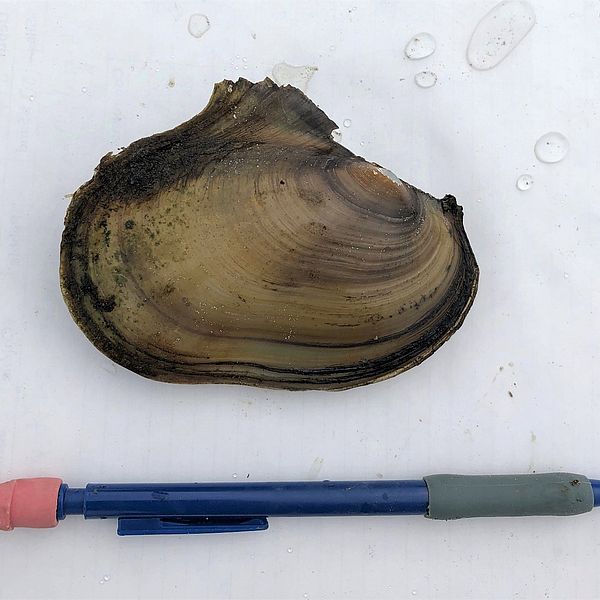
If you’ve paddled, taken a swim, or cast a fishing line in the waterbodies of the Lake Champlain Basin, you’ve likely spent time among one of the most enigmatic groups of aquatic animals in our region: native freshwater mussels. They’re…
Did you miss a “Zoom a Scientist” session? Don't worry! All the webinars are recorded and can be accessed via Youtube! Want to learn more about microplastics, climate change, or aquatic invasive species? Wonder how prepared we are for an oil spill or…
Vermont environmental advocates sent a letter to Governor Phil Scott on 4/6/20 thanking him for his efforts to address the unprecedented COVID-19 emergency, and urging him to uphold environmental and public health protections during the crisis, along…
May is American Wetlands Month! Join us in celebrating our wetland wonders, from swamps and shores to floodplain forests and fens. Check out the LCC Facebook page where we’ve been posting about a different Lake Champlain watershed wetland every week.